
BBL For Dark Spots: How It Fades Pigmentation (and What Duluth Patients Should Know)
BBL for dark spots is a BroadBand Light therapy that uses precise pulses of visible light to break down excess melanin in the skin, fading age spots, sun spots, freckles, and post-inflammatory pigmentation. The light targets pigmented cells, the body clears them over 1 to 2 weeks, and a typical course is 2 to 4 sessions spaced 3 to 4 weeks apart. At Synergy Aesthetics in Duluth, we deliver this with Sciton’s BBL HEROic platform.
If you’ve been staring at the same brown spot on your cheek for three summers in a row, this guide walks through what BBL actually does, what it doesn’t do, and what a real series looks like from consultation to clear skin.
So, does BBL actually work on dark spots?
Yes, and the reason it works is that it goes after the pigment itself, not the surface of the skin around it. That’s the part most people don’t realize on the first read.
Here’s the short version. The BBL handpiece sends quick pulses of visible light into the skin. The pigment cells (melanin) absorb that light, convert it to heat, and break apart. Over the next 1 to 2 weeks, your body sheds the treated pigment. The spot looks darker first (more on that in a minute), then flakes away naturally, and what’s left underneath is clearer skin.
Patients often describe the post-treatment look as “coffee grounds” sitting on top of the dark spots. That’s a real, well-known phase. It’s also the phase where the urge to scrub or pick is strongest. Don’t. The spots are meant to lift off on their own.
There’s also a deeper benefit most people miss. Research from Stanford has shown BBL treatments change gene expression in skin cells, pushing them to behave more like younger skin. That’s why patients who do consistent series often notice their skin doesn’t just look spotless, it looks healthier overall.
What kinds of dark spots can BBL fade?
BBL is best at melanin-based pigmentation that came from sun exposure or aging. That covers most of what people come in worrying about, but not all of it.
It works well on:
- Sun spots and age spots (best response, especially on the face, chest, and hands)
- Freckles that have gotten darker or more numerous over the years
- Post-inflammatory hyperpigmentation left behind by old breakouts
- Mild, stable melasma with careful settings (this one has a caveat we’ll get to)
If you want to understand the full picture of what’s actually happening in your skin, our page on the different types of hyperpigmentation breaks down the causes and why each type responds differently to light therapy.
One thing we see constantly at our Duluth clinic: people underestimate how much sun their skin has been through. Lake Superior summers, glare off the snow in January, weekends on the dock or the four-wheeler. None of it feels intense in the moment, but the long-term sun damage shows up on the cheekbones, the chest, and the backs of the hands a decade later. That’s the patient profile BBL was built for.
How is BBL HERO different from regular IPL?
BBL HEROic is Sciton’s upgraded version of broadband light therapy. It reaches deeper, treats faster, and stays more comfortable than older IPL devices. IPL and BBL look similar from the outside, but the difference matters for results.
Here’s the side-by-side:
|
Traditional IPL |
BBL HEROic |
|
|
Speed |
Standard pulse rate |
4x faster |
|
Depth |
Surface melanin and hemoglobin |
Pigment plus deeper collagen stimulation |
|
Cooling |
Limited |
2x cooling capacity |
|
Treatment area |
Smaller spot |
Larger 15x45mm window, face and body in one session |
|
Skin types |
Best for lighter tones |
Adaptable up to Fitzpatrick V |
For someone with mixed sun damage (a few age spots on the cheeks, redness around the nose, freckles on the chest), BBL HEROic handles all of it in one session. Older IPL devices typically need more passes and more visits to cover the same ground.
What is a BBL treatment for dark spots actually like?
A typical face session takes 15 to 20 minutes and feels like a warm rubber-band snap against the skin. Not painful for most people. A little startling at first, then routine by about 30 seconds in.
Here’s how a session goes at Synergy:
- Before. You come in with clean, makeup-free skin. No retinoids for a week, no tanning or self-tanner for 2 to 4 weeks. Dr. Zelen or one of our aestheticians reviews your skin, your medical history, and your goals. We map the treatment areas.
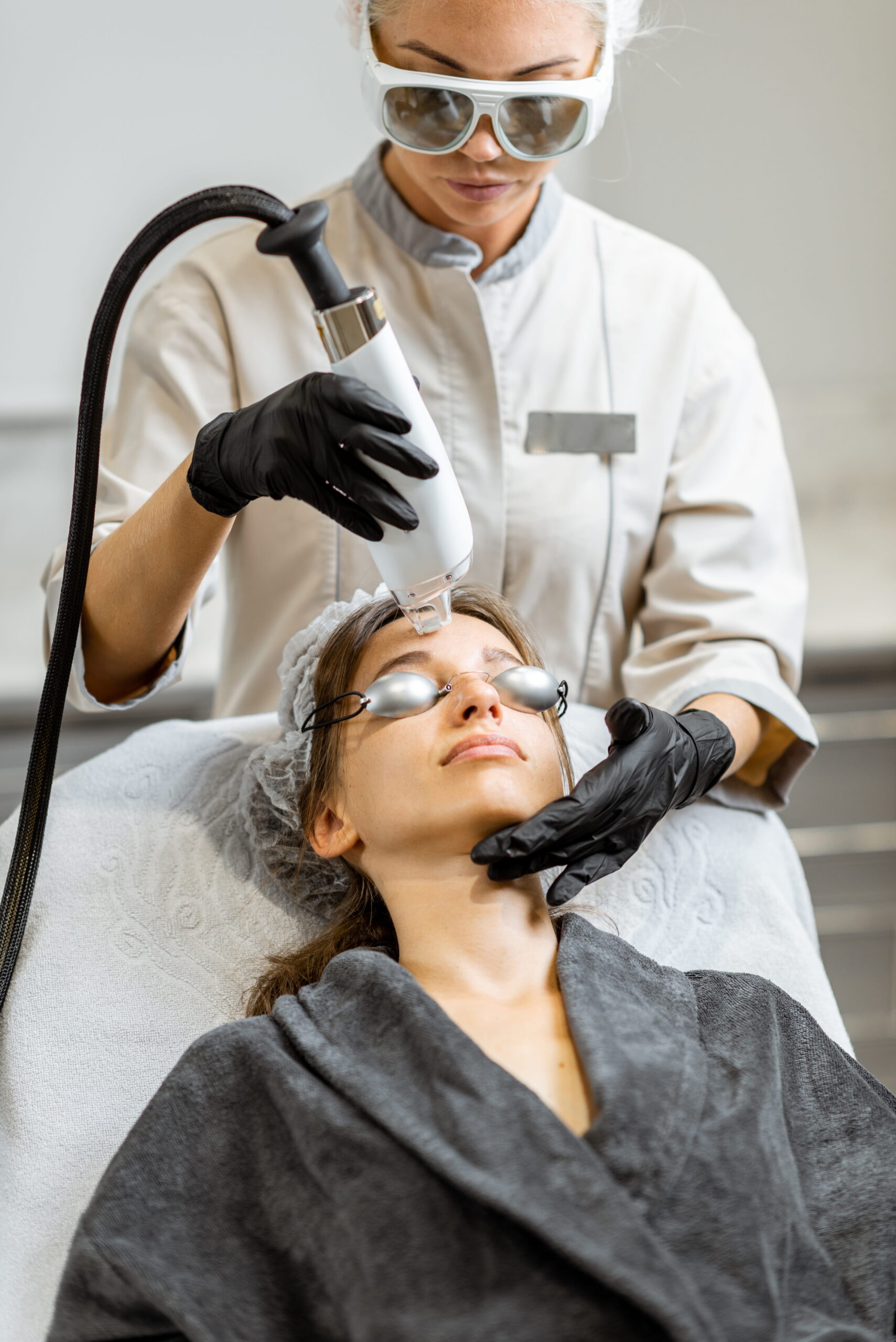
- During. Protective eyewear goes on. Cooling tip glides across the skin, light pulses fire in quick bursts. Most patients chat through the whole appointment.
- After. Mild redness for a few hours, similar to a light sunburn. Spots darken over the next 24 to 72 hours, then flake off naturally over 7 to 14 days. SPF goes on the same afternoon.
We tell every patient the same thing on the way out: the spots are supposed to look worse before they look better. Don’t scrub them, don’t pick at them, don’t try to speed them along. They will lift off on their own, and the skin underneath is what you came in for.
How many BBL sessions do I need to clear dark spots?
Most patients need 2 to 4 sessions spaced 3 to 4 weeks apart, then 1 to 2 maintenance treatments per year. That cadence is consistent with what major health systems recommend, including Duke’s guidance on broadband light therapy, which suggests three sessions four to six weeks apart for most facial cases.
How your specific series shakes out depends on a few things:
- Lighter, scattered sun spots often clear in 2 sessions
- Deeper or more widespread pigmentation usually needs 3 to 4
- Patients addressing the face and chest together often plan for 4 to give both areas a full course
After the initial series, BBL is cumulative. Each maintenance session keeps the gains from the last one in place and slows the rate at which new spots form. Skip a year and the sun catches up; come in annually and most patients say their skin looks better at 50 than it did at 40.
Want to know how many sessions your skin would actually need?
The fastest way to find out is to come in for a complimentary skin assessment. We’ll look at your pigmentation under proper lighting, talk through your goals, and tell you honestly whether BBL HEROic is the right call or whether another option fits better.
No obligation. We’d rather give you a clear answer than a fast yes.
Is BBL safe for my skin type?
BBL HEROic is safe for most skin tones, including darker skin up to Fitzpatrick type V, but not Fitzpatrick VI or skin that’s recently been tanned. The risk in tanned or very dark skin is that too much melanin absorbs the light energy, which can cause burning, hypopigmentation, or new dark spots, which is the opposite of what you’re trying to fix.
We pause or reroute treatment if any of these apply:
- Active tan or recent sun exposure within the last 4 weeks
- Pregnancy or breastfeeding
- Active skin infection, open wound, or cold sore outbreak in the area
- Accutane (isotretinoin) use within the past 6 months
- Certain photosensitizing medications
A quick word on melasma. It’s the one type of pigmentation that doesn’t always respond well to light therapy. Melasma is hormonal, which means the underlying driver is still there even after the surface pigment is treated. Sometimes BBL helps. Sometimes aggressive light makes it worse. We assess melasma carefully and may suggest a gentler protocol or a different treatment path entirely.
What pairs well with BBL to get rid of dark spots faster?
BBL handles the pigment work, but pairing it with collagen-stimulating treatments and the right daily skincare gets faster, longer-lasting results. Most of the patients with the most dramatic before-and-afters in our gallery did some version of this combination.
Two pairings we recommend often:
- SkinPen microneedling. Targets the texture side of the problem, plus helps with post-inflammatory pigmentation from old acne. We typically space pairing BBL with SkinPen microneedling at least 2 weeks apart from BBL sessions so the skin isn’t asked to do two jobs at once.
- Medical-grade skincare, especially daily SPF and vitamin C. This is the unglamorous half of the equation and the half most people skip. The medical-grade skincare we carry in-office is selected to support, not fight, the work BBL is doing.
The American Academy of Dermatology is blunt about the sunscreen part: daily broad-spectrum SPF 30 or higher is the single most important thing you can do to keep dark spots from coming back. BBL clears the existing damage. SPF prevents the next round.
Who’s actually doing the treatment at Synergy?
The provider running the BBL device matters as much as the device itself. A high-end Sciton platform in inexperienced hands gets average results. The same platform in trained hands changes faces.
At Synergy Aesthetics, Dr. Camille Zelen and our laser team handle every BBL HEROic case. Dr. Zelen brings a background in cardiac nursing and over a decade of aesthetics experience, and she’s one of fewer than 300 board-accredited cosmetic dentists worldwide. Our medical aesthetician Andi Hanson and laser technician Sara Balcer run the day-to-day laser work on the full Sciton platform.
Settings matter. Skin assessment matters more. That’s where the difference shows up at week 6.
TL;DR
- BBL for dark spots works by sending pulses of light into the skin, breaking down excess melanin, and letting your body shed the pigment over 1 to 2 weeks.
- It treats age spots, sun spots, freckles, post-inflammatory hyperpigmentation, and sometimes mild melasma.
- Plan on 2 to 4 sessions spaced 3 to 4 weeks apart, with annual maintenance after.
- A face session takes 15 to 20 minutes with minimal downtime. Spots darken before flaking off.
- Safe for most skin tones up to Fitzpatrick V. Not for recently tanned skin, Fitzpatrick VI, pregnancy, or recent Accutane use.
- At Synergy Aesthetics in Duluth, we use Sciton’s BBL HEROic platform with Dr. Zelen and our trained laser team.
Frequently Asked Questions
Does BBL permanently remove dark spots?
Pigment treated by BBL is broken down and cleared by the body, so those specific spots don’t come back. However, new dark spots can form from continued sun exposure, hormonal changes, or aging, which is why annual maintenance and daily SPF matter for keeping results long-term.
How long until I see results from BBL on dark spots?
Is BBL HEROic painful?
Most patients describe it as a quick rubber-band snap or a warm flash against the skin. Built-in cooling technology makes BBL HEROic noticeably more comfortable than older IPL devices, and a full face session is typically done in 15 to 20 minutes.
Can I have BBL for dark spots in the summer?
Yes, as long as you avoid direct sun exposure and tanning for at least 2 to 4 weeks before treatment and wear daily broad-spectrum SPF after. In Minnesota, fall and winter are still the easiest seasons to schedule a full series.
Will BBL work on melasma?
Sometimes, but melasma is tricky. It’s a hormonal condition, and aggressive light therapy can occasionally make it worse rather than better. We assess melasma carefully during the consultation and may recommend a gentler protocol or a different treatment depending on what we see.
Ready to see what your skin would look like without the dark spots?
If those age spots, sun spots, or post-acne marks have been bothering you longer than you’d like to admit, the next step is straightforward. Come in, let us look at your skin in person, and we’ll tell you exactly what we’d do and how long it would take. No pressure. No scripted upsell.
Schedule your BBL consultation →
Prefer to ask questions first? Send us a quick message and we’ll get back to you within a business day.